
Outdoor Living...Done Stress Free!
Upgrade your outdoor living without the headaches. Houston Deck and Shade delivers beautifully crafted decks and shade structures through a white-glove, stress-free process so you can relax while we do the work!
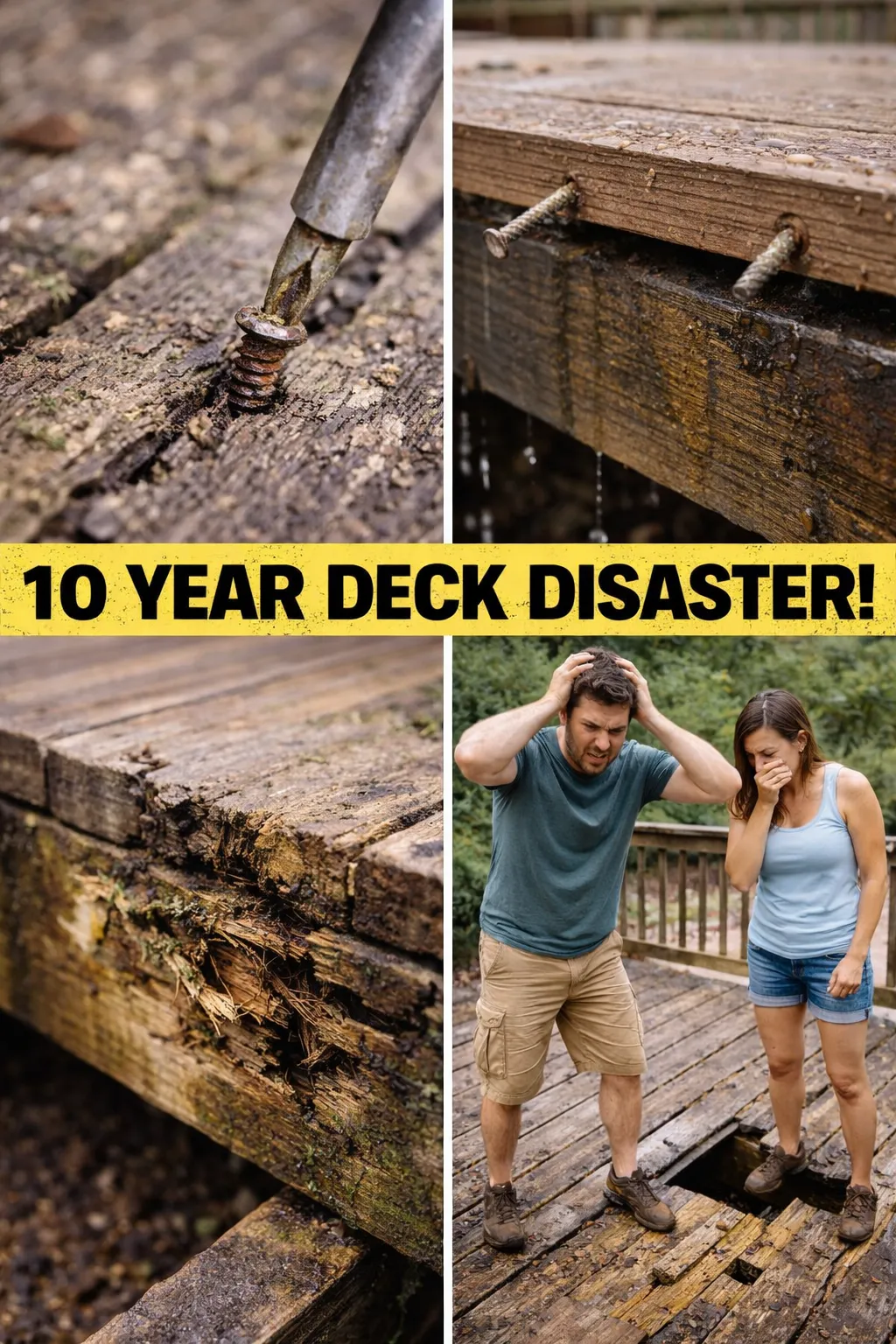
The 10-Year Deck Disaster: Why Most Decks Fail — and the Simple Fix That Makes Them Last Decades
A huge percentage of decks start failing well before the 10-year mark.
Not because people neglect them… but because of choices made before the first board was ever installed:
Cheaper materials used in the wrong places
Lack of protection where moisture collects
“builder shortcuts” hidden under the surface
Confusion about maintenance expectations
This short guide will show you how to avoid the traps — and build a deck that truly lasts!
#1 The Lowest Bid Trap
Why the cheapest price often becomes the most expensive deck!
Low bids usually “save” money by cutting things you don’t see:
Lower-grade framing in moisture areas
Untrained labor
Skipped protective steps
Decisions focused on speed instead of longevity
Those problems don’t show up right away.
They show up years later — when boards soften, rails loosen, stairs move, and repairs begin stacking up.
Lesson: The lowest price today can quietly create the highest cost tomorrow.
#2 The 10-Year Myth
Why most decks don’t last as long as homeowners expect.
Decks rarely fail because homeowners “forgot to maintain them.”
They fail because:
The wrong lumber was used in wet areas
Wood decks weren’t maintained consistently
Composite decks were installed without protecting the framing below
A simple but powerful example:
Joist tape on composite decks seals around fasteners and sheds water off the side, instead of allowing moisture into the top of the joist.
It’s invisible once the deck is finished — and it dramatically extends framing life.
Lesson: Longevity is planned — it doesn’t just happen.
#3 Pressure Treated Pine Vs Composite Hardwood
A simple comparison to help you choose what actually fits your backyard
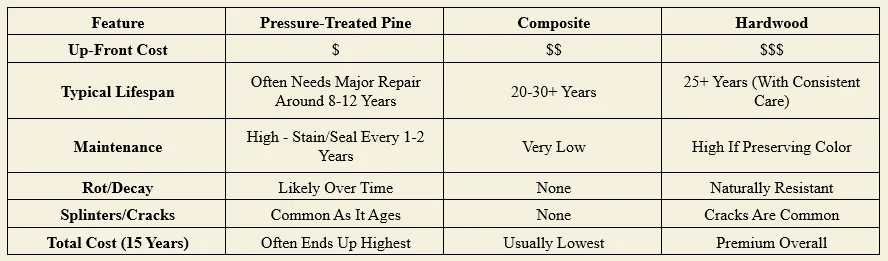
Sustainability note: Composite is often made using recycled plastics + reclaimed wood fibers — and its long lifespan reduces waste over time.
Simple Rule of Thumb:
Lowest Upfront = Pressure Treated Pine
Lowest Lifetime Hassle = Composite
Premium Natural Look = Hardwood
#4 Five Smart Questions to Ask Any Builder
(These Reveal Far More Than Most Estimates Do!)
“How long is this deck realistically going to last?”
You should hear realistic timelines — not hype.
“What kind of maintenance will this deck actually require?”
Clear expectations prevent frustration later.
“What do you do to make sure the structure holds up long-term?"
Listen for ground-contact lumber where needed, proper spacing, and joist protection on composite decks.
“Who will be responsible for my project from start to finish?”
You deserve a clear point of contact.
“If something goes wrong later, how do you handle it?”
Strong companies have simple, written processes.
#5 Deck Myths Vs Reality
What people hear… and what actually matters!
Myth: “Pressure-treated wood doesn’t rot.”
Reality: It slows rot — it doesn’t stop it.
Myth: “Composite is maintenance-free.”
Reality: It still needs cleaning and proper installation.
Myth: “All builders basically do the same thing.”
Reality: Craftsmanship and process create huge lifespan differences.
Myth: “The lowest bid saves money.”
Reality: Hidden shortcuts become future repairs.
Myth: “The warranty covers everything.”
Reality: Materials and workmanship are not the same thing.
#6 Price Vs Cost - Which Deck Really Costs Less?
(400 sq ft example with approx. square foot cost)

Takeaway:
The “cheap” deck becomes the middle-priced deck — and composite usually delivers the lowest total cost to own.
#7 Planning Your Deck With Confidence
A smarter way to build — without pressure.
You Know Have Clarity On:
Why some decks fail early
Which materials fit different lifestyles
How to compare bids fairly
How long-term cost really works
Our goal is simple:
Help you make a decision you feel good about — and then build a deck that actually lasts!
Reviews

Contact Us
(832) 480-5161